Historical Precedent: The Acapulco Compromise
How a lack of real estate in 1960s Mexico accidentally gave birth to a sport entirely reliant on bouncing a ball off a wall.
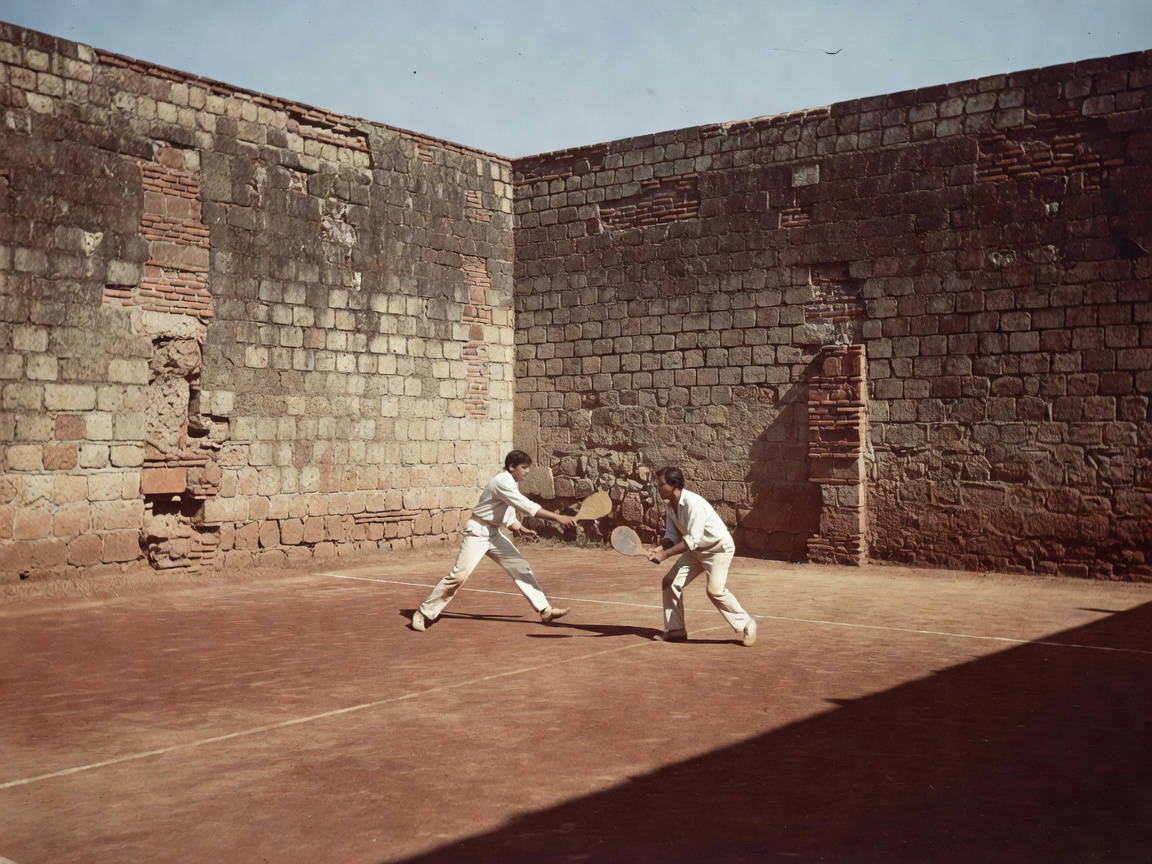
The Corcuera Enclosure
Sports are rarely invented; they generally evolve from previous pastimes through a series of accidents and regulatory adjustments. Padel is the exception. It exists because in 1969, a Mexican businessman named Enrique Corcuera wished to play tennis at his home in Acapulco, but lacked the necessary square footage on his property.
Instead of moving house or taking up a different hobby, Corcuera constructed a severely truncated court. To prevent the ball from constantly escaping into the neighbouring flora, he erected walls around it. He then handed his guests wooden paddles instead of stringed rackets to accommodate the reduced dimensions. The architectural compromise was entirely pragmatic, yet it inadvertently created the foundational rules of padel: the ball could be played off the enclosing walls.
The Spanish Export
The sport might have remained a peculiarity of the Corcuera household had it not been for a visiting friend, Alfonso of Hohenlohe. Recognising the inherent appeal of a game that required less running than tennis but offered longer rallies, Hohenlohe exported the concept to Spain in 1974. He built the country’s first two courts at the Marbella Club, tweaking Corcuera’s original design by adding wire mesh fencing to the sides.
Because these initial courts were located in an exclusive club, padel immediately acquired an aura of prestige. It was a sport for the affluent, entirely unburdened by the grueling physical demands of traditional racket sports. It was a tactical, social exercise, played largely in the Spanish sun.
The Argentine Connection
The third leg of padel’s early geographical triangle was established when Julio Menditeguy, another regular at the Marbella Club, introduced the sport to Argentina in the late 1970s. In Argentina, the trajectory was different. While it began in elite circles, it rapidly democratised.
By the 1990s, Argentina had fully embraced the sport, producing the first generation of professional players who treated the walls not as a novelty, but as a strategic weapon. The tactical depth of the game—the lobs, the precise spins, the patience required to outmaneuver opponents—was largely codified on Argentine courts during this era.
A Period of Stagnation
Despite massive popularity in Spain and Argentina, padel spent nearly two decades stubbornly refusing to expand elsewhere. The barrier was entirely structural. A padel court requires specialized construction—glass, steel, turf—and until a critical mass of demand exists, clubs are loath to surrender existing tennis courts to a niche novelty. For years, the sport remained confined to its two strongholds, regarded by the rest of the world as a curious regional variation of squash or Platform Tennis.
The Standardisation of Rules
As international competition tentatively began, the need for standardized rules became apparent. The early courts had varied wildly in dimensions, wall heights, and surface materials. The formalization of the 10 by 20 metre layout, the exact height of the glass and mesh, and the regulations regarding the racket’s construction were eventually locked down, ensuring that a court in Madrid played identically to one in Buenos Aires.
This standardization was crucial. It meant that the sport could finally be packaged, sold, and exported as a uniform product, paving the way for the international governing bodies that would later orchestrate its rapid expansion across Europe.
The Modern Irony
The great irony of padel is that a game born from a lack of space is now aggressively consuming it. Padel courts are systematically replacing tennis courts across the continent. The sport has successfully shaken off its aristocratic Marbella origins to become a mainstream fixture, yet it owes its entire existence to a wealthy man refusing to admit his garden was too small for tennis.